
A. Basic Program Information
- Official name of the academic program
- Bachelor of Science in Criminology
-
- Degree/Qualification
- Bachelor of Science in Criminology (BS Criminology)
- Program Level
- Undergraduate Program – Bachelor's Degree
- College/academic unit offering the program
- College of Criminal Justice Education
- Campus where the program is offered
- Northern Iloilo State University – Victorino Salcedo Campus
- Program Duration
- Four (4) years, subject to the approved curriculum and applicable academic policies.
- Mode of Delivery
- Blended learning
- Language(s) of instruction
- English and Filipino
- Brief program description
B. Program Objectives and Outcomes
- Provide students with broad and coherent knowledge of criminological theories, crime causation, criminal behavior, victimology, crime prevention, and the Philippine criminal justice system.
- Develop students’ ability to conduct ethical, systematic, and evidence-based criminological research on crimes, victims, offenders, and public safety concerns.
- Integrate human rights, victim welfare, social justice, and professional ethics into criminology education and practice.
- Develop competence in law enforcement administration, police operations, crime prevention, criminal investigation, and public safety management.
- Equip students with skills in criminalistics, forensic science, crime-scene investigation, and evidence handling using appropriate technologies.
- Develop students’ ability to interpret and apply criminal law, evidence, criminal procedure, and related jurisprudence.
- Develop students’ competence in institutional and community-based corrections, offender welfare, rehabilitation, treatment, restorative justice, and community reintegration.
- Prepare students for professional practice with critical thinking, communication, teamwork, ethical responsibility, and readiness for lifelong learning and career advancement.
- conduct criminological research on crimes, crime causation, victims and offenders to include deviant behavior;
- internalize the concepts of human rights and victim welfare;
- demonstrate competence and broad understanding in law enforcement administration, public safety and criminal justice;
- utilize criminalistics or forensic science in the investigation and detection of crime;
- apply the principles and jurisprudence of criminal law, evidence and criminal procedure;
- ensure offenders’ welfare and development for their reintegration to the community; and
- effectively communicate orally and in writing using both English and Filipino.
C. Curriculum
The Bachelor of Science in Criminology program follows the current approved curriculum in accordance with applicable Commission on Higher Education (CHED) policies and institutional academic requirements. The curriculum is designed to provide students with foundational knowledge, professional competencies, and practical skills in criminology and the administration of criminal justice.
Current Approved Curriculum
The official approved curriculum serves as the primary reference for the courses, credit units, prerequisites, and academic requirements of the program.
D. Admission Information
Entering Freshman
1. An entering freshman shall be accepted regardless of age, sex, nationality, religious beliefs, socio-economic status or political affiliations.
2. He/she must have graduated from a recognized secondary school.
3. He/she must have a complete and valid credentials:
ü Form 138 ( Report Card)
ü Certificate of Good Moral Character from the school where he/she graduated.
ü Certificate of Livebirth (PSA)
ü Entrance Examination and Interview
ü 2x2 ID pictures white background
4. He/she must passed in the College Admission Test.
5. He/she must qualify in the average grade requirement (GWA) set by the College.
6. He/she must qualify in the interview.
7. He/she must qualify in the Physical Health Examination.
8. He/she must pledge to abide by and comply with all the rules and regulation of the College.
9. He/she must not have enrolled in any academic college subject/s prior to enrollment as beginning freshman otherwise he/she shall be classified as transferee.
10. Students enrolled in vocational courses or those not leading to a degree program are admitted as entering freshmen.
11. An entering freshman is not accepted during the second semester or during the summer term.
Transferees
1. Must have complete and valid credentials.
2. Must meet all the prescribed admission requirements:
ü College qualifying test for transferees
ü Average grade requirement (GWA)
ü Copy of grades or transcript of records signed by the Registrar for reference purposes.
ü Transfer credentials
ü Interview
ü Physical or health examination certificate
ü machine copy of PSA birth certificate
ü Certificate of Good Moral Character
3. Admission shall be on probation basis during the first term stay in the college
4. Official Transcript of Records shall be submitted prior to admission for the following semester otherwise, enrollment will not be allowed.
5. Transferees from other SUCs shall be admitted and treated as regular student in accordance with the existing policies of the University.
6. Transferees within the NISU system shall be exempted from undergoing the admission process, subject for the approval of the respective college he/she is going to enroll.
7. Must pledge to abide by and comply with the rules and regulations of the University.
E. Fees, Scholarships, and Financial Assistance
1. Applicable Fees
Northern Iloilo State University is covered by the Free Higher Education (FHE) program under Republic Act No. 10931, otherwise known as the Universal Access to Quality Tertiary Education Act which provides free tuition and other school fees for qualified Filipino undergraduate students in public higher education and technical-vocational institutions.
2. Available scholarships and grants:
ü Government-funded scholarships and educational grants:
 Tulong Dunong Program (TDP)
Tertiary Education Subsidy (TES)
CHED Merit Scholarship Program (CMSP)
Resolution 286, Series of 2025- A resolution approving the grant of ten percent (10%) discount on all campus purchases including but not limited to food items, supplies and other official university transactions to all students.
3. Student Financial Assistance
Student Labor
Students who are able, deserving and promising may be recommended by the unit heads to the Director of the Students and Auxiliary Services to work as a student assistants. The compensation is Php 30.00 per hour.
F. Faculty Profile
The faculty profile provides an overview of the educational attainment, academic ranks or positions, fields of specialization, professional qualifications, research interests, and academic or professional affiliations of the faculty members involved in the delivery of the program. These qualifications support effective instruction, research development, community engagement, and continuous improvement of the Criminology program.
G. Research and Innovation
1. Research areas and priority themes
| Research Area | Priority Themes |
| Law Enforcement | Police effectiveness, community policing, and public safety |
| Crime Prevention | Situational crime prevention and community-based initiatives |
| Criminal Investigation and Forensic Science | Evidence examination, forensic methods, and investigative practices |
| Correctional Administration | Rehabilitation, reintegration, and correctional programs |
| Criminal Justice and Law | Criminal justice processes, legal awareness, and human rights |
| Emerging Crime Issues | Cybercrime, online fraud, and technology-related offenses |
| Criminological Research | Crime patterns, victimization, juvenile delinquency, and criminal behavior |
2. RESEARCH PROJECTS AND PUBLICATIONS
MATRIX OF RESEARCHES (C.Y. 2023)
| No. | Title | Proponent/s | Tile of the Conference, Date, Venue | Level | Publication Details |
| 1 | Lived Experiences of Locally Stranded Individuals (LSI) during the COVID-19 Pandemic | April Blass S. dela Cruz | 6th Philippine Conference on Multidisciplinary Research March 31-April 1, 2023 via zoom | International | N/A |
| 2 | Establishing Models on Cultural Preservation and Resilient IP Communities: Connecting the Lessons of the Past to the Consequences of the Future | Fea L. de la Cruz | N/A | N/A | N/A |
| 3 | Police Performance In Preventing Drug Related Incidents | Nelly L. Supiter | 6th Philippine Conference on Multidisciplinary Research March 31-April 1, 2023 via zoom | International | N/A |
| 4 | Impact of Pandemic to the Learning Behaviour of BS Criminology Students | Trina Gaile D. Porras | 6th Philippine Conference on Multidisciplinary Research March 31-April 1, 2023 via zoom
BEST ORAL PRESENTER | International |
N/A |
| 5 | Work-life Balance and Self-Reported Health of Employees during the COVID-19 Pandemic: A Case of a State University in the Philippines | Girlie B. Chavez, April Blass S. de la Cruz, Jackie Len P. Bañas | N/A | N/A | Publication: IJAAS (International Journal of Advanced and Applied Sciences Vol. 10, Issue 9 September 2023 Scopus and WOS indexed |
| 6 | Understanding People’s Resiliency or Complacency under Life Threatening Circumstances: A Case Study |
Fea L. de la Cruz | N/A | N/A | N/A |
MATRIX OF RESEARCHES (C.Y. 2024)
|
No. |
Title | Proponent/s | Tile of the Conference, Date, Venue |
Level |
Publication Details |
|
1 | Evaluation of ACE-V Methodology in Fingerprint and Questioned Document Examination Process | Chrismel Joy S. Agolito | April 17-19, 2024 1st International Multidisciplinary Research Conference via zoom | International | N/A |
|
2 | Assessment of Competency in Recognizing Mechanical and Chemical Erasures in Questioned Documents | Riena Grace G. Defensor | April 17-19, 2024 1st International Multidisciplinary Research Conference via zoom |
International |
N/A |
|
3 | Experiences in Handling Criminalistics Subjects through Online Class: Basis for Teaching Enhancement | Fea L. de la Cruz | N/A | N/A | N/A |
|
4 |
Spatial Variations in Ordinance Enforcement: Implication for Policy and Practice | Chavez, Girlie B., Limson, Jomartin C., de la Cruz, April Blass S. | 12th International Conference on Multidisciplinary Research (ICMR 2024) August 27-29, 2024 Via zoom | International | Library Progress International Vol. 44 No. 3 (2024): LIB PRO. 44 (3) JULY-DEC 2024 Published: 31- 07-2024
Scopus indexed |
MATRIX OF RESEARCHES (C.Y. 2025)
| No. | Title | Proponent/s | Tile of the Conference, Date, Venue | Level | Publication Details |
| 1 | Counter Measures of Small Business Enterprises Against Counterfeited Money | Plantig, Jesse Alvin A. Castor, Glenn G. Ausa, Ronie A. Chavez, Raffy B. Osita, Marlon B. | SUCTEA Inc., VI National Conference 2025 Diversion 21 Hotel, Iloilo City April 10-11, 2025 | National | N/A |
| 2 | Operability and Efficiency of Barangay VAW Desk in Handling Domestic Violence | Castor, Glenn G. Osita, Marlon B. Ausa, Ronie A. Chavez, Raffy B. Plantig, Jesse Alvin A. | SUCTEA Inc., VI National Conference 2025 Diversion 21 Hotel, Iloilo City April 10-11, 2025 | National | N/A |
| 3 | Difficult Areas Encountered by Criminology Students When Taking Licensure Examination | Osita, Marlon B., Chavez, Raffy B., Agolito, Chrismel Joy S., Plantig, Jesse Alvin A. | N/A | N/A | N/A |
| 4 | Challenges of NISU students through Distance Learning on the Use of Self Learning Module | De la Cruz, April Blass S., Chavez, Raffy B., Libiano III, Bonifacio A. | N/A | N/A | N/A |
| 5 | Unraveling and Understanding Today's Youth: Analysis of Causal Factors Affecting Juvenile Delinquency | Agolito, Chrismel Joy S. Defensor, Riena Grace G. Verdad, Jayson F., Caberoy, Fea D. | N/A | N/A | N/A |
| 6 | Knowledge and Practices on Environmental Management of Small-Scale Fishermen in Northern, Iloilo Philippines: A Model for Sustainability | Ausa, Ronie A. Borda, Donna Jane S. Supiter, Nelly L. Castor, Glenn G. Osita, Marlon B. | N/A | N/A | N/A |
| 7 | The Lived Experiences of Children from Dysfunctional Families in Iloilo, Philippines | Borda, Donna Jane S. Chavez, Raffy B. Ausa, Ronie A. Castor, Glenn G. Supiter, Nelly L. | N/A | N/A | N/A |
|
8 | Effectiveness of Therapeutic Community Modality Program Implemented in Barotac Viejo District Jail | Dela Cruz, April Blass S. Chavez, Raffy B. Chavez, Gerlie B. Golingay, Fatima Libiano, Bonifacio B. | N/A | N/A | N/A |
|
9 | Intern Insight: Evaluating Criminology Students' Transition to Professional Environments | Defensor, Riena Grace, Ausa, Ronie A., Castor, Glenn G. Supiter, Nelly L., Agolito, Chrismel Joy S., Verdad, Jayson F. | N/A | N/A | N/A |
| 10 | Police Investigator's Proficiency in Forensic Photography: Techniques and Best Practices
| Plantig, Jesse Alvin A., Ausa, Ronie A. Castor, Glenn G. Supiter, Nelly L., Agolito, Chrismel Joy S., Defensor, Riena Grace G., Verdad, Jayson F. | N/A | N/A | N/A |
| 11 | Hidden Victims: A Phenomenological Exploration of Abuse Male Partner in Sara, Iloilo | Glenn G. Castor Ronie A. Ausa Raffy B. Chavez Jesse Alvin A. Plantig Marlon B. Osita | Waragwagan Research Conference | Local | N/A |
MATRIX OF RESEARCHES (C.Y. 2026)
| No. | Title | Proponent/s | Tile of the Conference, Date, Venue | Level | Publication Details |
| 1 | Deceptive Profits: An investigation on the Proliferation on Cash Reward Scams in Digital Platforms | Agolito, Chrismel Joy S., Defensor, Riena Grace G.,Osita, Marlon B. | Waragwagan Research Conference | Local | N/A |
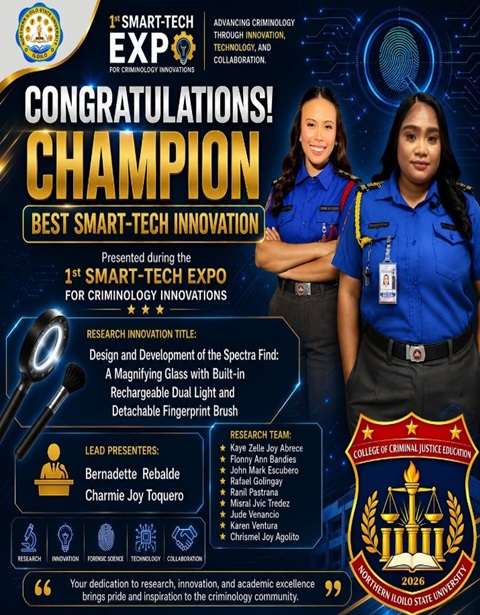
| 2 | Design and Development of Spectra-Find: A Magnifying Glass with Built-in Rechargeable Dual-Light and a Detachable Fingerprint Brush | Agolito, Chrismel Joy S. (Faculty) Rebalde, Bernadette B. Toquero, Charmie Joy R., Abrece, Kaye Zelle Joy B., Bandies, Flonny Ann G., Escubero, John Mark W. Golingay, Rafael G. Pastrana, Ranil Jr. B. Tredez, Misral Jvic P. Venancio, Jude V. Ventura, Karen H. | 1st Smart-Tech Expo · Grand Champion -Best Smart-Tech Innovation · Best Innovation in Fingerprint Identification · Best Innovation in Criminal Investigation · Most Innovative Concept Award · Best Technological Application Award · Best Presentation Award (Video/ Exhibit) | International | N/A |
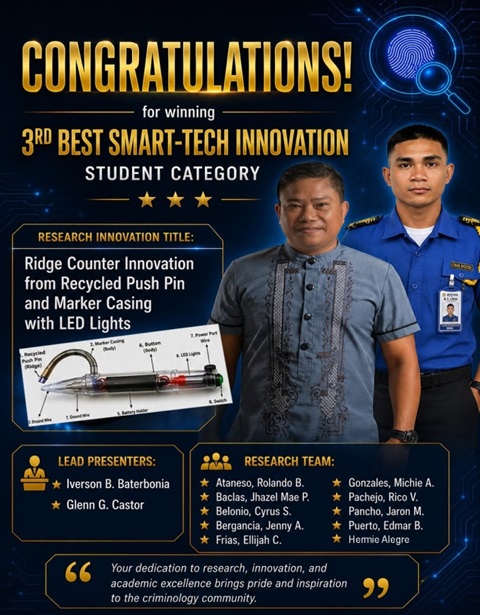
| 3 | Development of Ridge Counter From Recycled Push Pin and Marker Casing with a Rechargeable Light for Forensic Application | Castor, Glenn G. (Faculty) Baterbonia, Iverson B., Ataneso, Rolando B., Baclas, Jhazel Mae P., Bergancia, Jenny, Belonio, Cyrus S., Frias, Ellijah C., Gonzales, Michie A., Pancho, Jaron M., Puerto, Edmar, Pachejo, Rico V. | 1st Smart-Tech Expo
2nd Runner-Up – Outstanding Innovation Award
| International | N/A |
| 4 | Development Of fingerprint Brush from Chicken Feathers with Integration of Led Light | Castor, Glenn G. (Faculty) Molavin, John Mark A., Bashary, Abdulhafis P., Caraecle, El John A., Dumancas, Roberto Jr. M., Gonzales, Milk D., Lubaton, Mark Vincent M., Palalon, Alysa Mar E., Servania, Jonel S., Tanutan, Jebie A. | 1st Smart-Tech Expo | International | N/A |
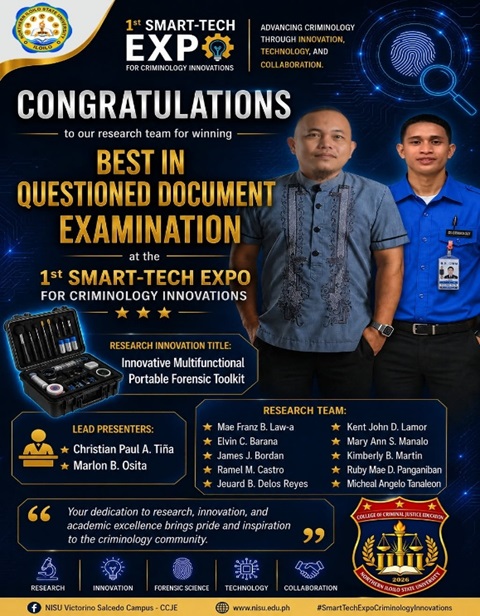
| 5 | Innovative multifunctional portable forensic toolkit | Osita, Marlon B. (Faculty) Tiña, Christian Paul A., Law- a, Mae Franz B., Barana, Elvin C., Bordan, James J., Castro, Ramel M., De Los Reyes, Jeuard B., Lamor, Kent John D., Manalo, Mary Ann S., Martin, Kimberly B., Panganiban, Ruby Mae D., Tanaleon, Michael Angelo, Bornales, Jose Mari C. | 1st Smart-Tech Expo
1st Runner-Up – Outstanding Innovation Award
Best Innovation in Questioned Document Examination | International | N/A |
| 6 | Development Of Fingerprint Powder From Scratch Paper | Plantig, Jesse Alvin A. (Faculty) Rosales, Wilty Kate A., Ancuna, Dareth Jan C., Baloyo, Jestony A., De Asis, Mae P., Jalandoni, Kerr Bradley L., Lozada, Tiody A., Panes, Mark B. Talledo, JJ Manx O., Velasco, Jess A., Villarete, Shane A. | 1st Smart-Tech Expo | International | N/A |
| 7 | Understanding the Influence of Labeling Theory on Juvenile Delinquency | Caberoy, Fea D. (Faculty) Ma.Lyssa I. Bello (Student Presenter) Arman C. Anzon Jolena J. Arcede Mary Rose D. Bayoneta John Rick A. Bedia Jethro P. Bernal Mark Christian L. Biñas Jhon Mark Rioven P. Boga Cris Realyn E. Libed Maria Claire V. Posadas | National Student Research and Innovation Conference NaSRIC 2026 | National | N/A |
| 8 | Beating the Threat: Applicability of the Portable Photovoltaic Voice Safety Alarm Device | Verdad, Jayson F. (Faculty ) Labrilla, Laira Jane B. Cabarles, Leoneil Z. Gallardo, Junjie Y. Gayuma, Kier Orville P. Isidoro, John Emmanuel A. Pabustan, Lovelyn D. Salmorin, John Vincent S., Senon, Gabrielle B. Tanes, Benjamin L. | N/A | N/A | N/A |
|
| Early Motherhood the Risks of Child Neglect and Violence | Caberoy, Fea D. (Faculty) Magnate, Arianne Joy B., Aguire, Rongie A. Buhayan, Rocely B. Dela Cruz, Jeane Lynytte N. Josue, Gerrele R. Rufino, Rofred Jann B. | N/A | N/A | N/A |
| 9 | Police-Community Relations on Public Trust and Community Cooperation | Agolito, Chrismel Joy S. (Faculty) Depol, Shaira P. Aseral, Airah Mae A. Batoleño, Daniela B. Castillo, Kim Jude P. Demontaño, James A. Fernandez, Christine Grace G., Gregorio, Emel G., Jamilarin, Karen Mae N. Labor, Mebel C. Sumeras, Dy March S. | N/A | N/A | N/A |
| 10 | Assessment of Response Time Efficiency of BFP Station in Balasan, Iloilo” | Ausa, Ronie A. (Faculty) Bandojo, Dave D., Biogos, Rowilee Knight C., Ciudad, Frank Ryn D., Convocar, Jhon Albert B., Obillos, John Marthy B. | N/A | N/A | N/A |
| 11 | Factors Affecting the Effectiveness of PNP Incident Response Operation | Defensor, Riena Grace G. (Faculty) Deocampo, Iris May J. Abenir, Lenmin Z. Bandiez, Rod Jhon B. Bataga, Mariecon A. Besin, Jeazabell Kate D., Dela Cruz, Cy Kier T., Panado, Raymar A. Obligar, Jemar Elouis Tungala, Ronilo Ace | N/A | N/A | N/A |
| 12 | Public Perception on Lowering the Age of Criminal Liability | Verdad, Jayson F. (Faculty)
Francisco, Jifford F. (Student Presenter) Aguirre, Christopher Charles A., Araneta, Jhon Lourence B., Baul, Jayboy A., Bansiloy, Vience R., Bernal, Jhon Manuel B., Delos Reyes, Regie, Daniel, Kier Louis, Padios, Jhon Paul B. | National Student Research and Innovation Conference NaSRIC 2026
| National | N/A |
| 13 | Exploring the Influence of Socio-Economic Factors Towards Dynamite Fishing Practices in Three Selected Coastal Barangays in Carles, Iloilo | Santiago, Enrick Robert D., Amar, Justin V., Agregado, Joey D., Balome, Jeric R., Delima,Gian Carlo A., Palma, Jhon Loyd C. Posadas, Christopher Robert P., Salabia, Andrie A., Sanico, Jerome B., and Supiter, Nelly L. (Faculty) | N/A | N/A | N/A |
| 14 | Implementation of PNP’s Kabataan Kontra Droga at Terorismo (KKDAT) Program | Batallones, Shairen B., Abenir, Mariz Anne B., Are, Mj G., Bacomo, Kim Roel J., Espinosa, Francis S., Guillen, Stehve Matthew B., Ortega, Hazel Ann P., Pasamante, Jessa J., Sevilla, Edgel Shane A., Porras, Trina Gaile D. (Faculty) | N/A | N/A | N/A |
| 15 | Living With Addiction: The Lived Experiences and Coping Strategies of Families Affected by Alcohol Abuse | Ausa, Ronie A. (Faculty), Del Castillo, Janine B., Banate, Jecel F., Arbolonio, Oliver S., Basa, Roger A., Ignacio, Cedie B., Matta, Tanya H., Zarris, Jeffrey M., | N/A | N/A | N/A |
| 16 | Development of Fingerprint Powder from Red Mud Infused with Graphite Material | Osita, Marlon B. (Faculty), Laurencio, Kyla Eiron A., Alajar, Kenth Jhun L., Astorga, Donie A., Amene, Rommel B., Ferrariz, Renz Jan G., Granil, Jhon Louie B., Pamotillo, Christan D., Tiangson, Cyle June | 1st Smart-Tech Expo | International | N/A |
| 17 | From Retake to Remarkable: Overcoming Challenges of Criminology Licensure Exam for Retakers of NISU-Sara | Defensor, Riena Grace G. (Faculty), Ochia, Stephanie Rose D., Barrera, Ann Karlyn D., Capuyan, Irah Lee B., Celeste, Alleah Marie G., Cortez, Jesson B., Labos, Sherilyn M., Miraflores, Joylyn G., Padasas, Calixto B., Pesidas, April Joy A., | N/A | N/A | N/A |
| 18 | Exploring Non-Institutional Approaches to Alcohol Addiction Recovery | Dela Cruz, April Blass S. (Faculty), Puerto, Reynold D., Baclas, Joel Jr., Baliao, Juan Medel Jr. S., Beñosa, Mario III B., Buhayan, Nico B., Casacop, Ricky John | N/A | N/A | N/A |
| 19 | Employability of the College of Criminology Graduates of Batch 2021-2023: A Tracer Study | Verdad, Jayson F. (Faculty), Valla, Novelyn M., Bantayanon, Claire Marie R., Bajo, Mary Grace B., Bandojo, Marilou C., Compa, Shane Anne B. | N/A | N/A | N/A |
3. Innovations and Intellectual Property
| Title of Innovation / Output | Proponent/s | Type of Output | Year | IP Status / Evidence |
| 1. Portable Ridge Visualization and Counting Apparatus with Configurable Illumination Alignment | Glenn G. Castor, Ronie A. Ausa, Raffy B. Chavez | Prototype | 2026 | Invention 1/2026/050299
|
| 2. Modular Forensic Fingerprint Device with LED Illumination | Glenn G. Castor, Ronie A. Ausa, Raffy B. Chavez | Prototype | 2026 | Invention 1/2026/050296
|
H. Internationalization
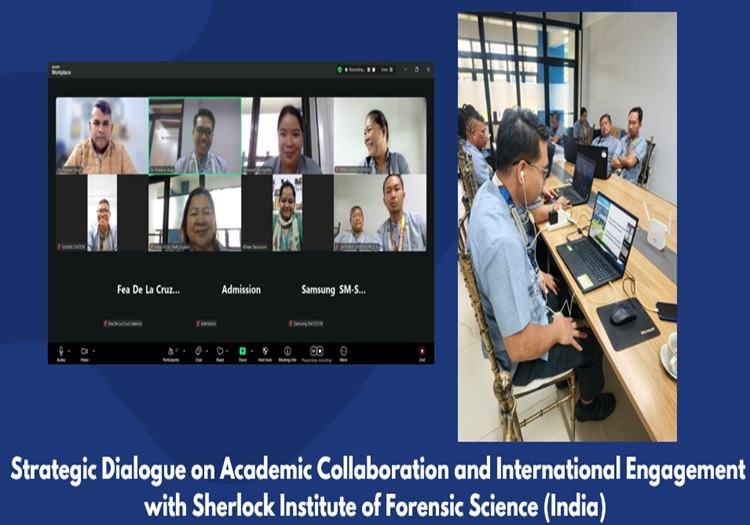
Internationalization initiatives is an important strategy for enhancing academic quality, research collaboration, faculty development, and student learning. Through international academic engagement, internationalization with the Sherlock Institute of Forensic Science, India, and Prevent Crime Now, Malaysia, aims to establish a collaborative framework to advance forensic science education, research, training, and professional practice through bilateral and international cooperation between India, Malaysia and the Philippines. The partnership aims to strengthen institutional capabilities, enhance forensic competencies, promote scientific integrity, and contribute to justice, public safety, and community well-being through knowledge sharing, innovation, and evidence-based collaboration.
International Partner Institutions
Sherlock Institute of Forensic Science
Sherlock Institute of Forensic Science India is an institution committed to the advancement of forensic science as a vital instrument for the promotion of justice, truth, public security, and community well-being, guided by its mission to empower individuals with essential forensic expertise and its vision of a society where forensic science plays a fundamental role in upholding justice at all levels. It endeavors to excel in the promotion of knowledge, the pursuit of truth, and the unification of forensic professionals across borders, serving as a catalyst for the dissemination of forensic science education and practice through high-quality research, innovation, and international collaboration.
Prevent Crime Now
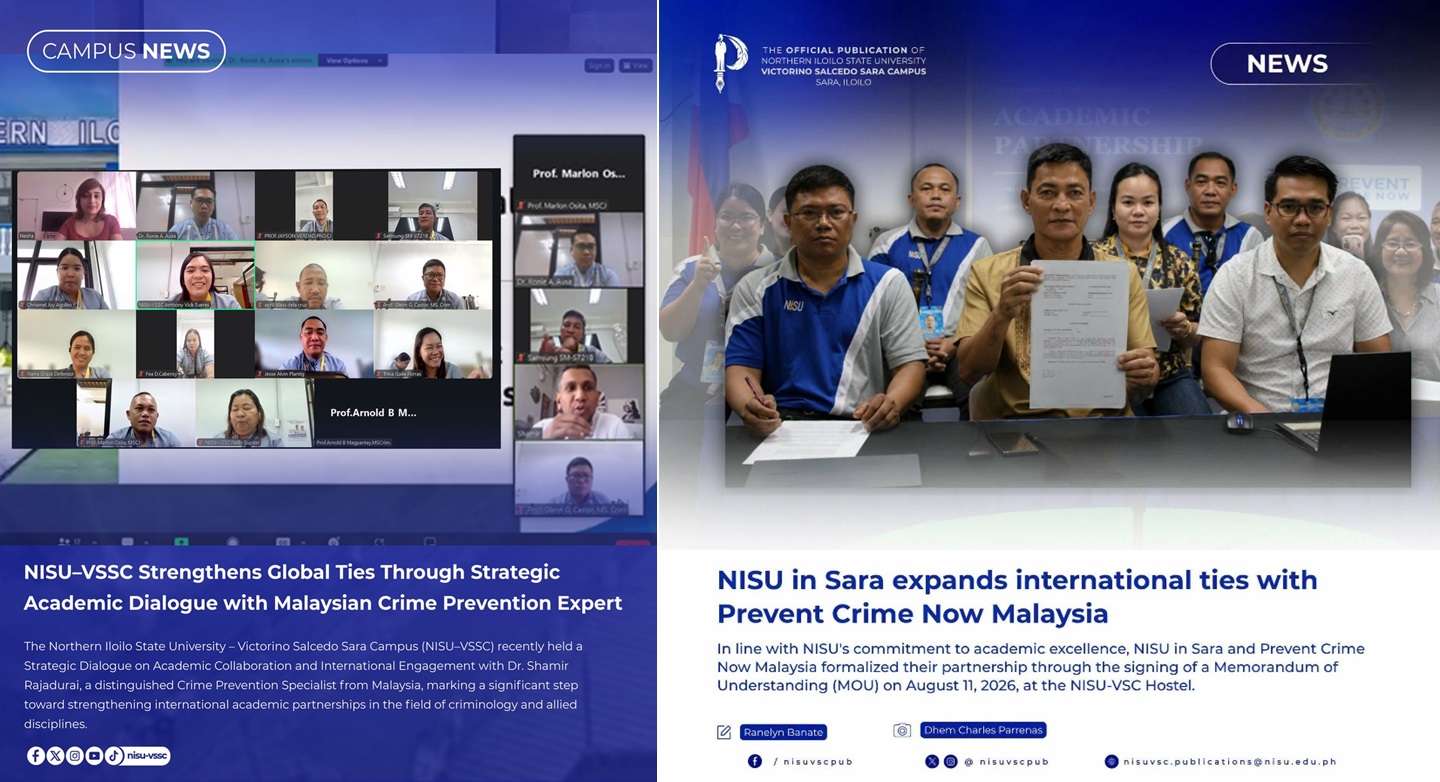
Prevent Crime Now is a crime prevention consultancy led by Dr. Shamir Rajadurai, specializing in practical, research-based strategies to help organizations prevent crime and strengthen security. Its approach draws on grassroots research and insights into criminal behavior to understand how crimes occur and how they can be prevented.
With experience serving organizations across Malaysia, Indonesia, and the Philippines, Prevent Crime Now focuses on developing clear, practical, and accessible crime prevention solutions to protect people, assets, and organizational resources. Its approach emphasizes actionable strategies that organizations can understand, implement, and sustain effectively. They specialize in CPTED consultancy, fraud prevention training and crime prevention workshops.
International Academic and Research Collaborations
The College of Criminal Justice Education together with Tarlac State University established international academic and research linkages with the Sherlock Institute of Forensic Science and Prevent Crime Now Malaysia, in collaboration with the Philippine Criminologists Association of the Philippines, Inc. (PCAP) headed by Dr. Gerry J. Caño, during the 1st Smart Tech Expo held on May 7–8, 2026.
This initiative highlights the department’s commitment to strengthening international partnerships, promoting collaboration in forensic science and crime prevention, and exploring opportunities for academic exchange, research collaboration, and knowledge sharing in the field of criminology and criminal justice.
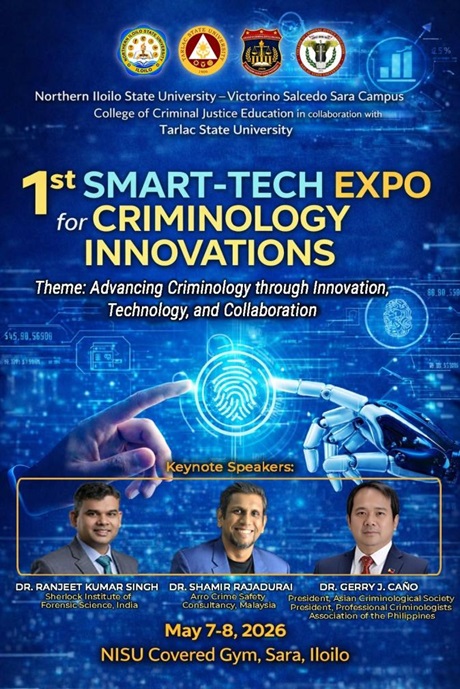
The 1st Smart-Tech Expo for Criminology Innovations featured distinguished keynote speakers who shared their expertise on emerging technologies, security management, digital criminology, and forensic innovation. Among the speakers was Dr. Shamir Rajadurai, CEO of Prevent Crime Now, Malaysia, who delivered a presentation entitled “Smart Technologies and Security Management in the Modern Era.” Dr. Ranjeet Kumar Singh, Founder and CEO of the Sherlock Institute of Forensic Science, India, discussed “Criminology in the Digital Age: Ethical and Technological Dimensions.” Meanwhile, Dr. Gerry J. Caño, President of the Asian Criminological Society and the Professional Criminologists Association of the Philippines (PCAP), presented “Advancing Criminology through Emerging Technologies and Forensic Innovation.” Their presentations emphasized the importance of integrating modern technologies, ethical practices, effective security management, and forensic innovations into criminology education and professional practice. The event also provided a valuable platform for knowledge exchange and strengthened opportunities for international academic and research collaboration in criminology, criminal justice, forensic science, and crime prevention. This research endeavor has been participated by the different state universities and colleges in the region.
International Conferences and Activities
| No. | Title | Proponent/s | Tile of the Conference, Date, Venue |
| 1 | Lived Experiences of Locally Stranded Individuals (LSI) during the COVID-19 Pandemic | April Blass S. dela Cruz | 6th Philippine Conference on Multidisciplinary Research March 31-April 1, 2023 via zoom |
| 2 | Police Performance In Preventing Drug Related Incidents | Nelly L. Supiter | 6th Philippine Conference on Multidisciplinary Research March 31-April 1, 2023 via zoom |
| 3 | Impact of Pandemic to the Learning Behaviour of BS Criminology Students | Trina Gaile D. Porras | 6th Philippine Conference on Multidisciplinary Research March 31-April 1, 2023 via zoom
BEST ORAL PRESENTER |
| 4 | Evaluation of ACE-V Methodology in Fingerprint and Questioned Document Examination Process | Chrismel Joy S. Agolito | April 17-19, 2024 1st International Multidisciplinary Research Conference via zoom |
| 5 | Assessment of Competency in Recognizing Mechanical and Chemical Erasures in Questioned Documents | Riena Grace G. Defensor | April 17-19, 2024 1st International Multidisciplinary Research Conference via zoom |
| 6 |
Spatial Variations in Ordinance Enforcement: Implication for Policy and Practice | Chavez, Girlie B., Limson, Jomartin C., de la Cruz, April Blass S. | 12th International Conference on Multidisciplinary Research (ICMR 2024) August 27-29, 2024 Via zoom |
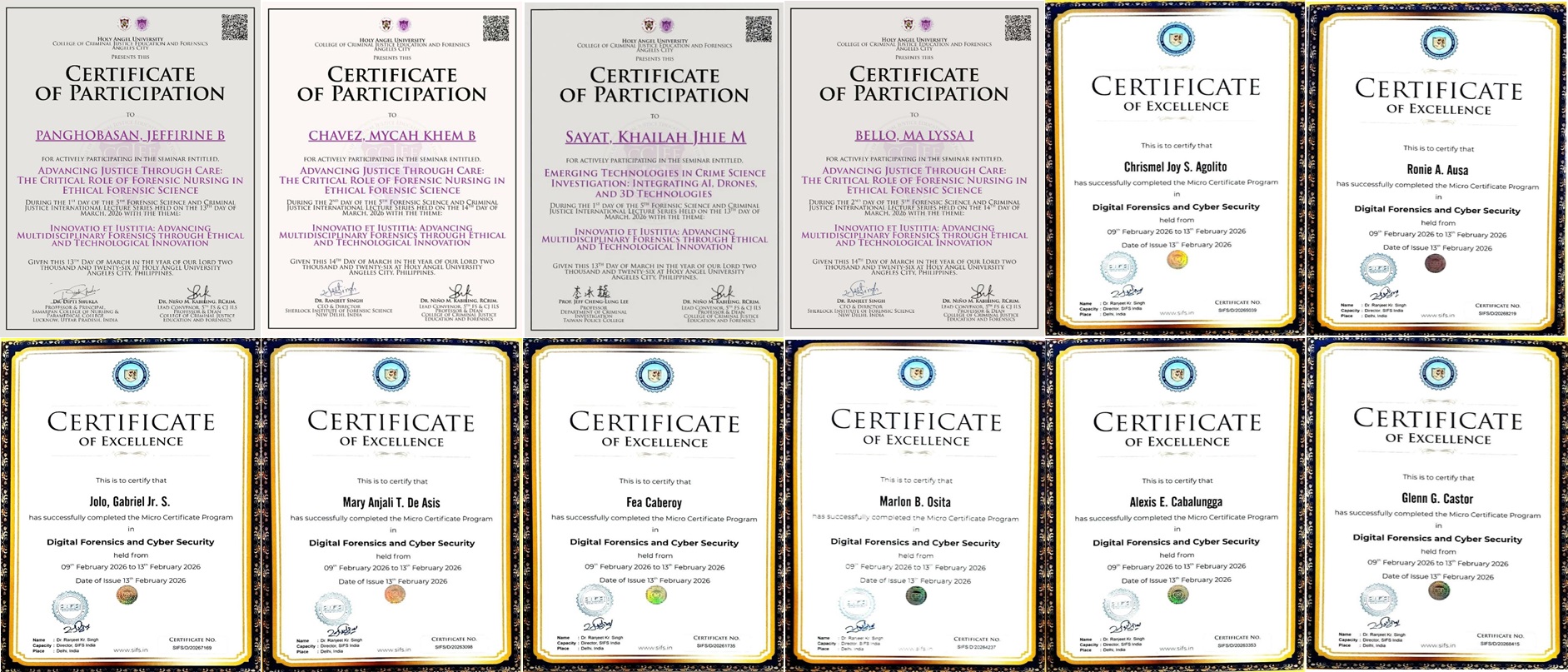
Attendance to International Webinars/Programs Through the programs continuing internationalization efforts, faculty members and students participate in international webinars, seminars and academic programs related to criminology, cybercrime, forensic science, criminal investigation, and crime prevention. These activities provide opportunities to gain global perspectives, enhance professional competencies, exchange knowledge with international experts, and learn about emerging practices in criminal justice.
I. Industry and Community Engagement
The program strengthens its industry and community engagement through partnerships with law enforcement agencies, criminal justice institutions, local government units, and community organizations. These linkages provide opportunities for experiential learning, professional development, community service, and the application of criminological knowledge to real-world concerns. Through internship and on-the-job training arrangements, professional collaborations, and community extension initiatives, the program promotes the development of competent, ethical, and socially responsible future criminologists.
1. Industry Partners
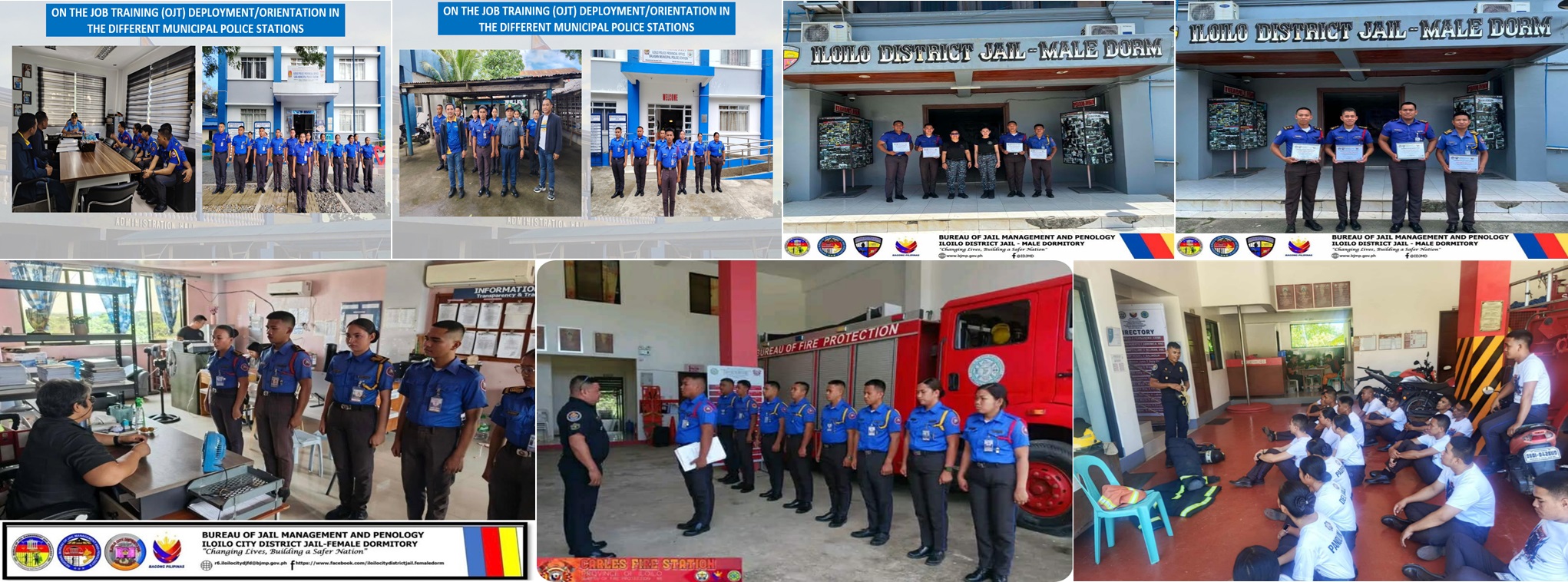
The program collaborates with relevant agencies in the criminal justice system, including the Philippine National Police (PNP), Bureau of Fire Protection (BFP), Bureau of Jail, Management and Penology (BJMP), Tarlac State University, and Sherlock Institute of Forensic Science. These partnerships support student training, professional exposure, and the exchange of expertise.
2. Internship/OJT/Practicum Arrangements
The program implements internship or on-the-job training arrangements in accordance with the approved curriculum and applicable institutional policies. Students are deployed to qualified partner agencies and institutions where they gain practical experience in law enforcement, criminal investigation, public safety, and other relevant criminal justice functions.
3. Professional and Institutional Partnerships
Professional partnerships with Tarlac State University, Sherlock Institute of Forensic Science, and Prevent Crime Now provide opportunities for faculty members and students to engage with practitioners and experts in law enforcement, forensic science, criminal investigation, correctional administration, and crime prevention.
MOU SHERLOCK INSTITUTE OF FORENSIC SCIENCE

4. Community Engagement and Extension Activities
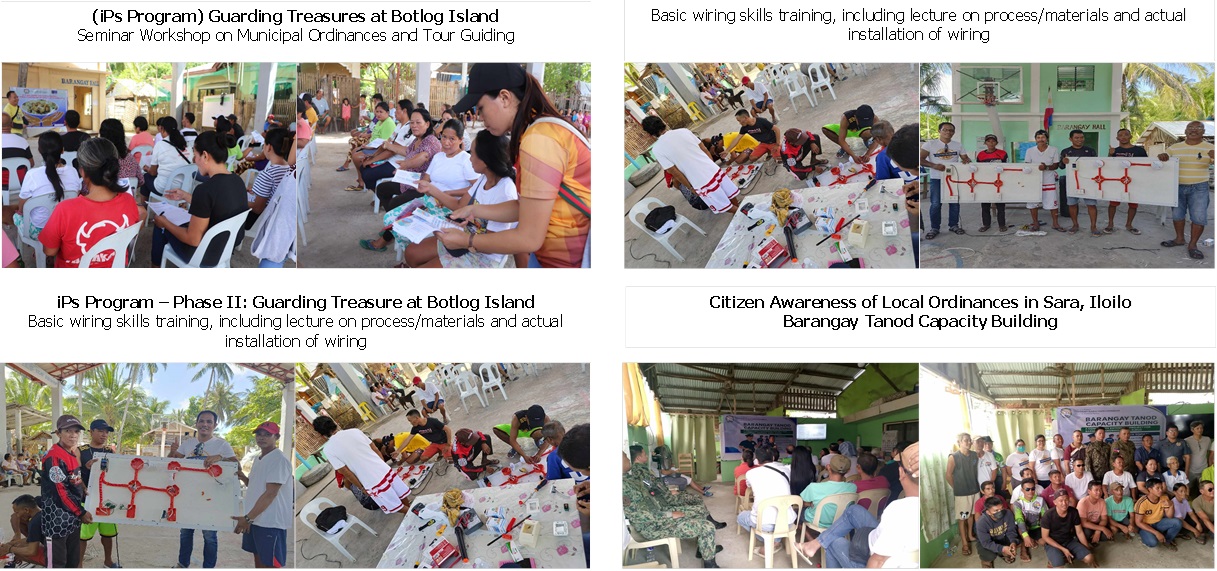
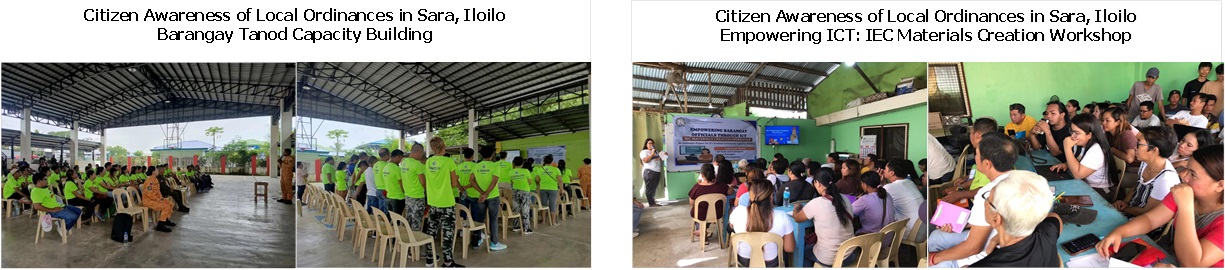
The program conducts community-oriented activities that includes information and education campaigns, community seminars, outreach programs, and collaborative activities with local communities and government agencies.
MATRIX OF EXTENSION ACTIVITIES
| No. | Program / Project | Extension Activity | Date | Venue / Target Beneficiaries |
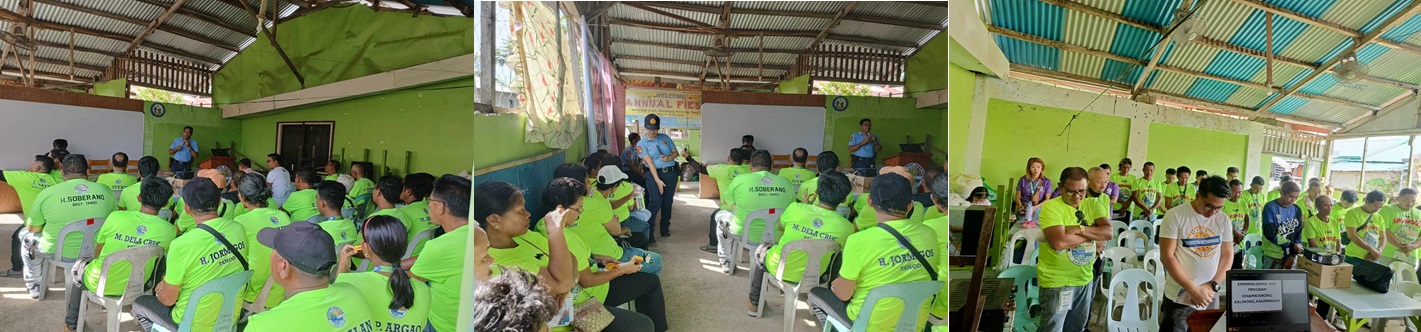
| 1 | KKK Program – Kinamatarong, Kalinong, Kauswagan; Project 1: Establishing a Model Barangay on Effective Dispute Resolution and Crime Prevention | Training/seminar for barangay tanods on responsibilities, crime prevention, proper arrest, and crime-scene response | September 6, 2024 | Barangay Tanods Barangay Anoring Sara, Iloilo |
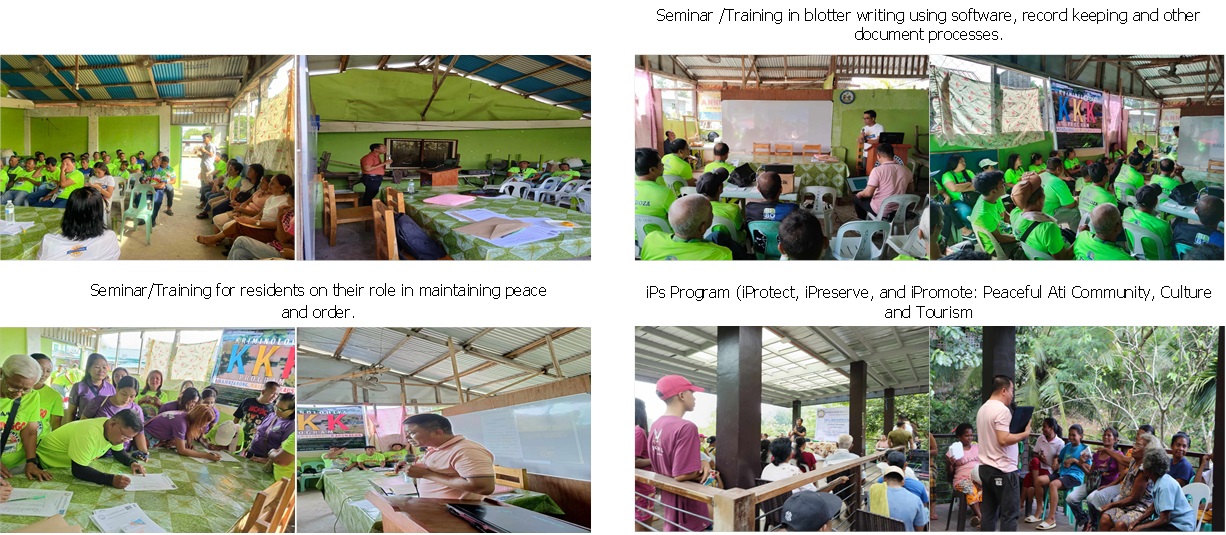
| 2 | KKK Program – Kinamatarong, Kalinong, Kauswagan; Project 1. Establishing a model barangay on effective disputes resolution and crime prevention | Seminar/training for barangay officials on blotter creation, filing documents, Lupon processes, community–law enforcement coordination, and identifying barangay needs | September 7, 2024 | Barangay Officials Barangay Anoring Sara, Iloilo |
| 3 | KKK Program – Kinamatarong, Kalinong, Kauswagan; Project 2: Modernizing Practices | Seminar/training on blotter writing using software, record-keeping, and other document processes | September 29, 2024 | Barangay Officials Barangay Anoring Sara, Iloilo |
| 4 | KKK Program – Kinamatarong, Kalinong, Kauswagan; Project 2: Modernizing Practices | Seminar/training for residents on their role in maintaining peace and order |
| Barangay Officials Barangay Anoring Sara, Iloilo |
| 5
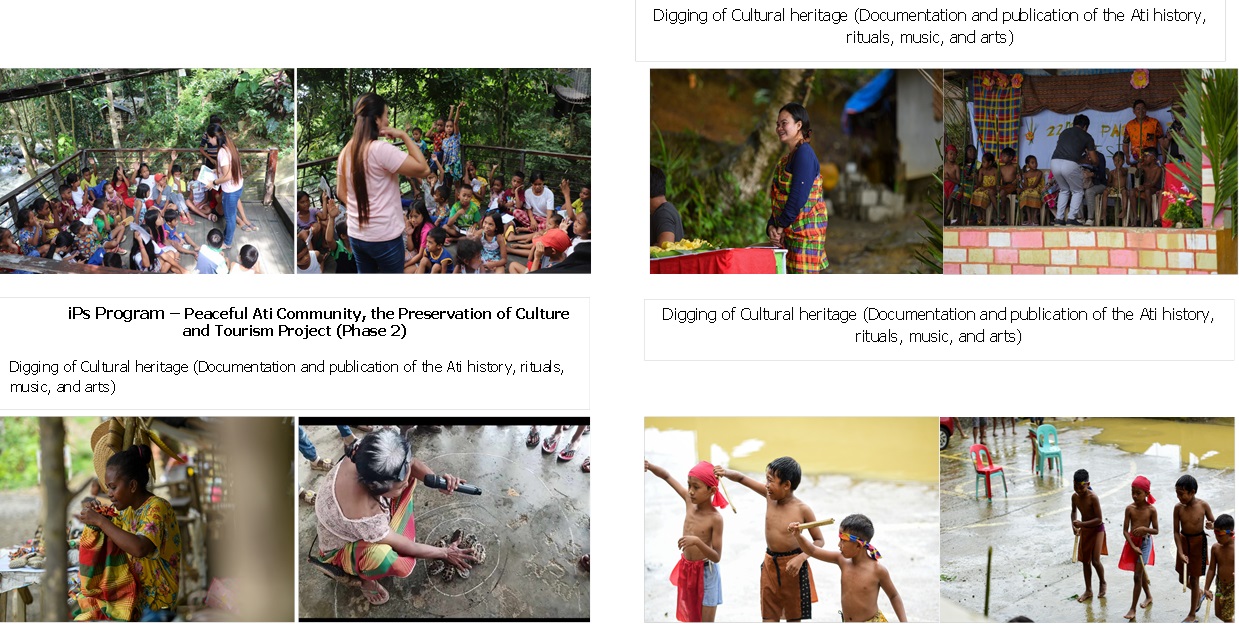
| iPs Program (iProtect, iPreserve, and iPromote: Peaceful Ati Community, Culture and Tourism | Training on Food Preparation, Promotion of Social Media for Selling Native Products, and Creation of Tribal Peacemakers | September 30, 2023 | Nagpana Ati Community Barangay Lipata, Barotac Viejo, Iloilo |
| 6 | iPs Program – Peaceful Ati Community: Preservation of Culture and Tourism Project (Phase 2) | Digging of cultural heritage: documentation of Ati history, rituals, music, and arts | September 14, 2024 | Nagpana Ati Community Barangay Lipata, Barotac Viejo, Iloilo |
| 7 | iPs Program – Peaceful Ati Community: Preservation of Culture and Tourism Project (Phase 2) | Continuation of cultural heritage documentation and publication | November 23, 2024 | Nagpana Ati Community Barangay Lipata, Barotac Viejo, Iloilo |
| 8 | (iPs Program) Guarding Treasures at Botlog Island | Seminar Workshop on Municipal Ordinances and Tour Guiding | Nov. 25-26, 2023
| Brgy Botlog, Concepcion Iloilo |
| 9 | iPs Program – Phase II: Guarding Treasure at Botlog Island | Basic wiring skills training, including lecture on process/materials and actual installation of wiring | November 24, 2024 | Brgy Botlog, Concepcion Iloilo |
| 10 | Educational Engagement; Capacitating Local Government Leader | Empowering Barangay Officials Through ICT: IEC Materials Creation Workshop" | June 15, 2025 | Brgy. Officials of Brgy. Anoring, Sara, Iloilo |
| 11 | Educational Engagement; Capacitating Local Government Leader | Barangay Tanod Capacity Building | June 28-29, 2025 | Brgy. Tanod of Brgy. Anoring, Sara, Iloilo |
KKK Program – Kinamatarong, Kalinong, Kauswagan; Project 1: Establishing a Model Barangay on Effective Dispute Resolution and Crime Prevention
Training/Seminar for Tanods in their responsibilities, effective approaches to reduce and prevent crime, conduct proper arrest, & on how to respond a crime scene
KKK Program – Kinamatarong, Kalinong, Kauswagan;
Project 2: Modernizing Practices
Seminar/Training for barangay officials in creating blotter, filing of documents, Lupon Process, their role in bridging the gap between law enforcement and community, identification of the needs and addressing the issues in the barangay for progress.
J. Facilities and Learning Resources
The college utilizes facilities and learning resources to support effective instruction, practical training, research, and the development of professional competencies among criminology students.
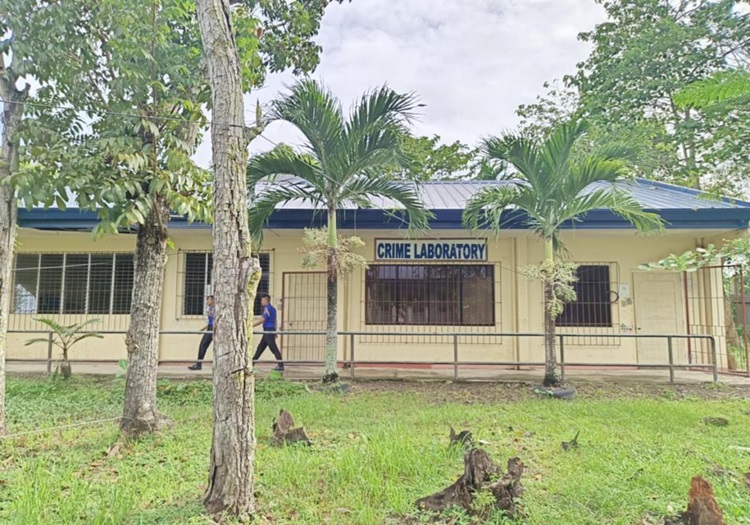
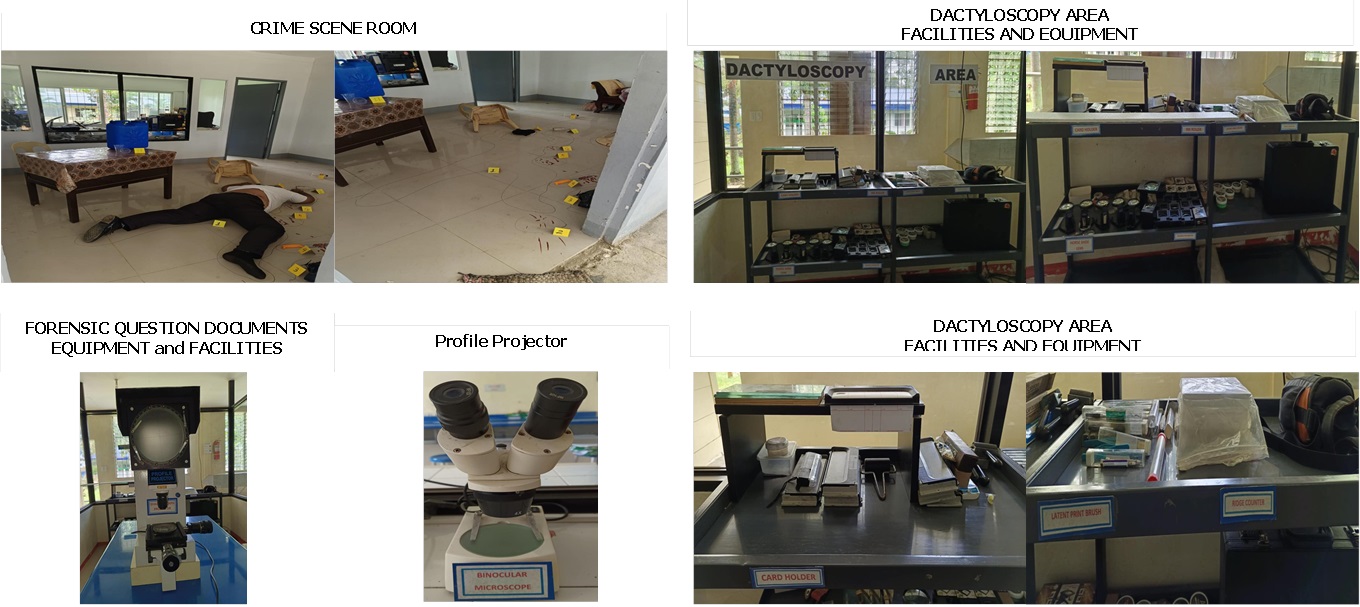
1. Laboratories and Specialized Facilities
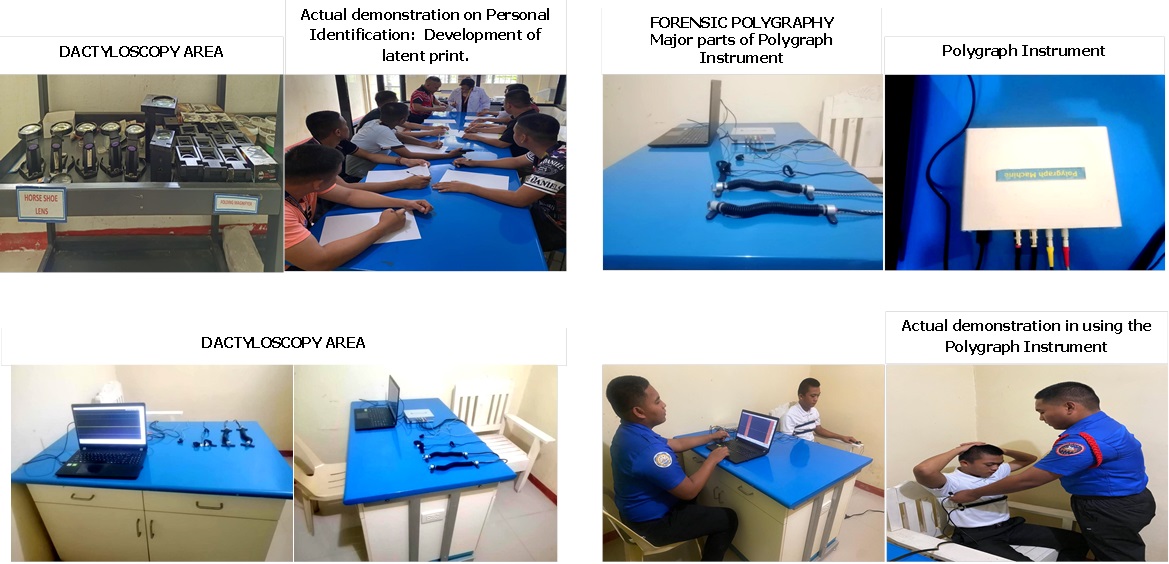
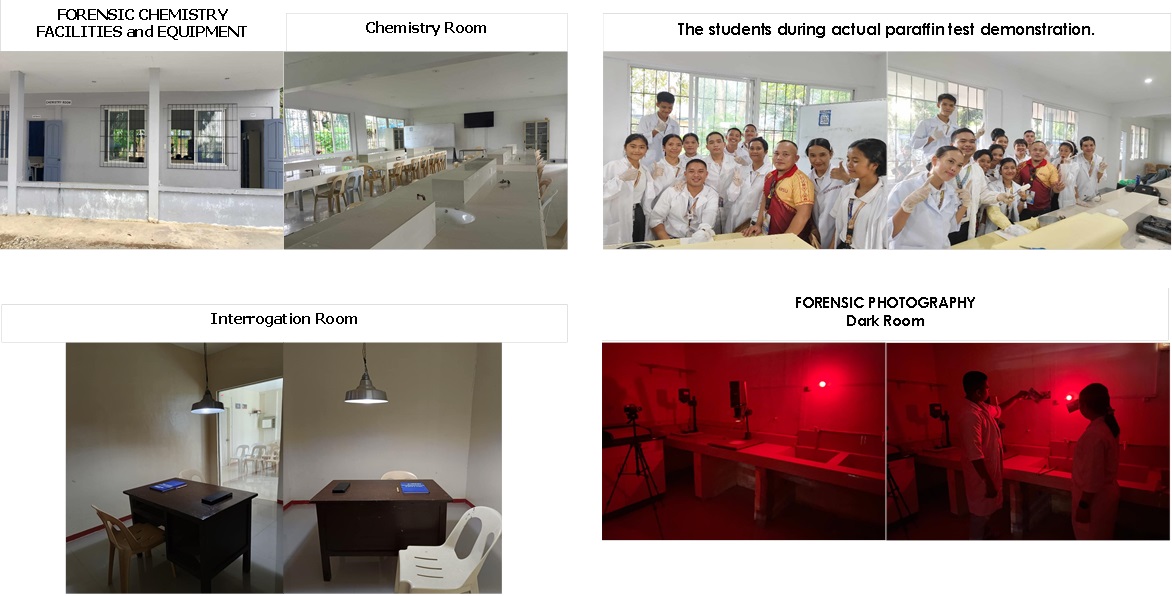
The program utilizes specialized laboratories and facilities that support practical instruction and skills development in criminology-related disciplines, particularly forensic science, criminal investigation, forensic photography, fingerprint examination, and other evidence-processing techniques. These facilities provide opportunities for students to apply classroom concepts through laboratory exercises, demonstrations, simulations, and practical activities.
2. Classrooms
The program uses classrooms and designated instructional spaces conducive to teaching and learning. These facilities support lectures, group discussions, case analyses, role-playing activities, and other student-centered learning strategies.

3. Libraries and Learning Resources
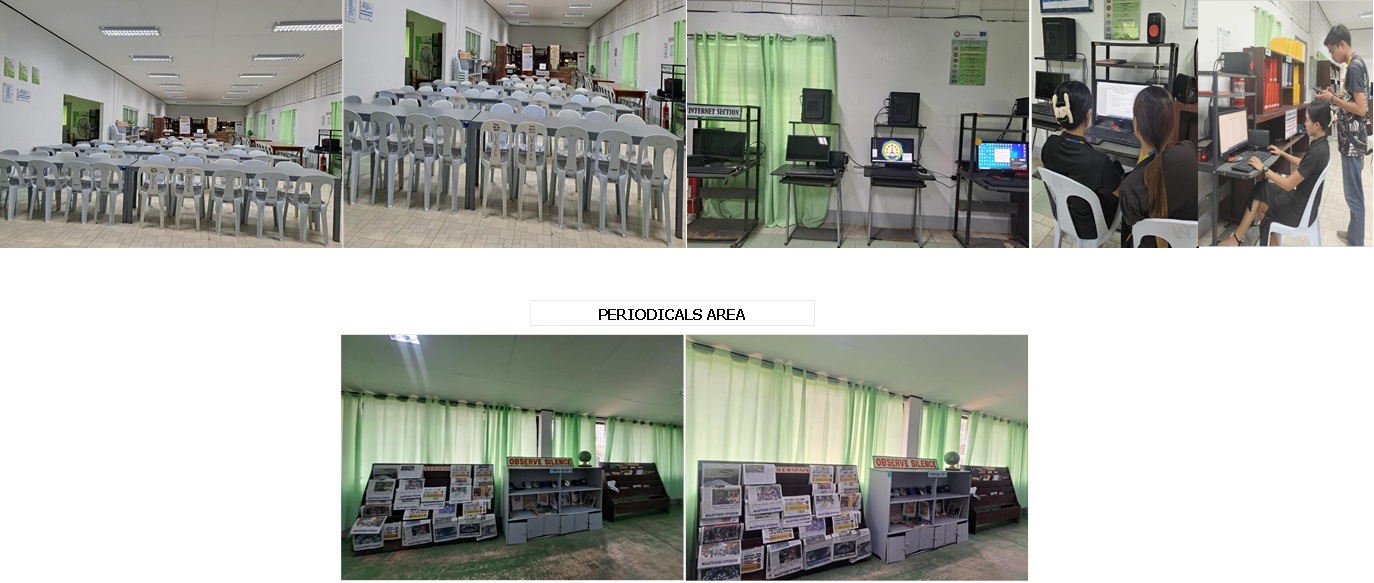
The university library provides access to books, reference materials, criminology textbooks, scholarly journals, research publications, electronic resources, and other instructional materials relevant to the program.
K. Student Development and Activities
1. Student Organizations
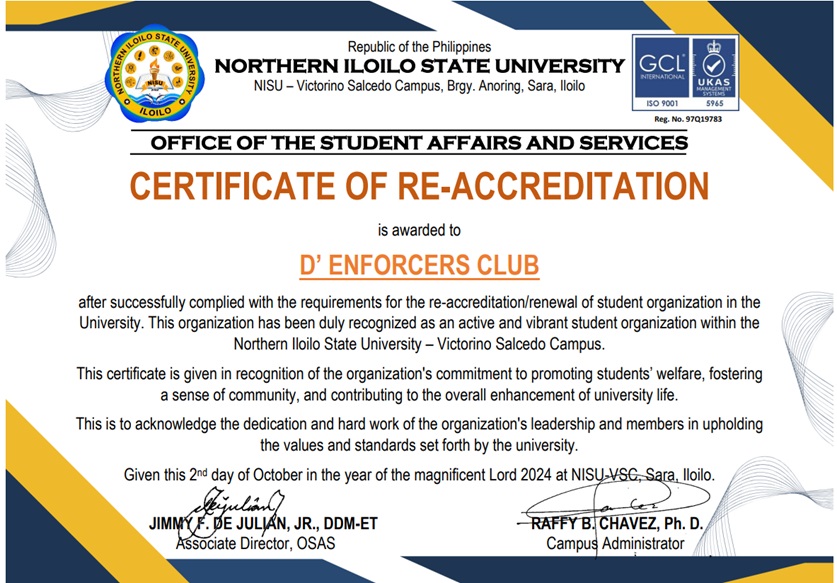
The College of Criminal Justice Education has a duly recognized student organization known as the D’Enforcers Club, which is officially registered with the University. The organization is composed of students from the Bachelor of Science in Criminology (BS Criminology) and Bachelor of Science in Industrial Security Management (BSISM) programs. It operates in accordance with its duly approved Constitution and By-Laws, which serve as the guiding framework for its governance, organizational structure, activities, and responsibilities. The D’Enforcers Club aims to promote student leadership, discipline, camaraderie, professional development, and active participation in activities that support the goals and objectives of the College.
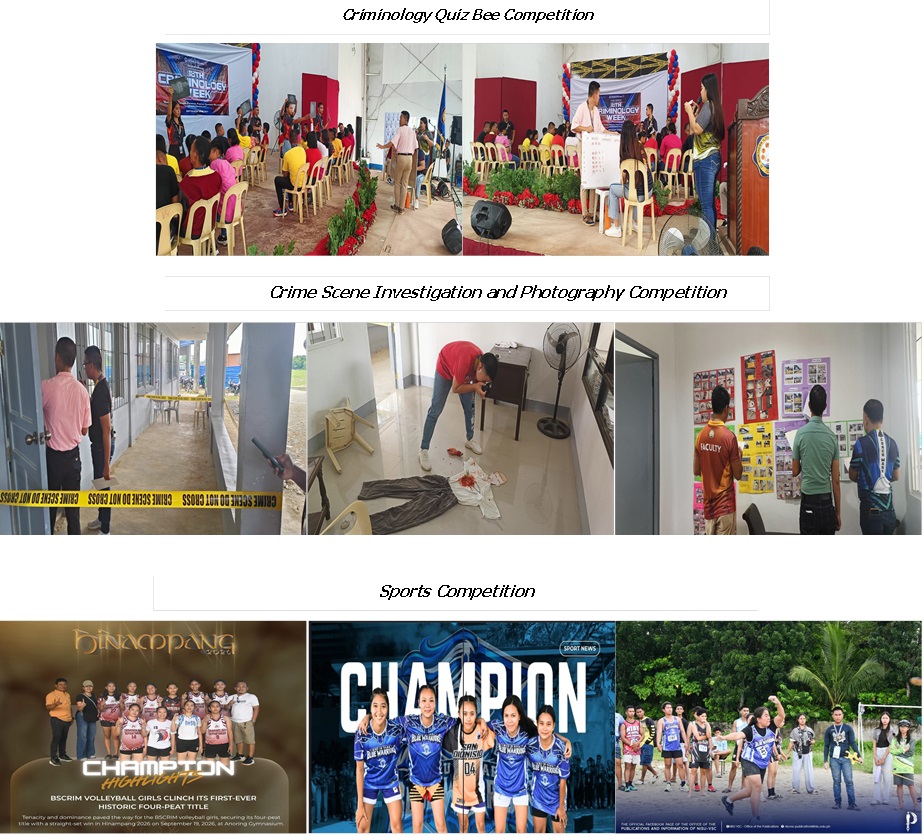
2. Student Competitions
The College of Criminal Justice Education actively encourages student participation in various academic, skills-based, and co-curricular competitions to enhance their knowledge, practical competencies, leadership, teamwork, and professional development. Through these activities, students are provided with opportunities to apply classroom learning to practical situations, demonstrate their talents, and develop the confidence and discipline necessary for their future careers in the fields of criminology and industrial security management.
Students of the College participate in various competitions organized by the University, other higher education institutions, and relevant professional organizations. Examples include Criminology Quiz Bees, Crime Scene Investigation and Photography Demonstrations, Debate and Extemporaneous Speaking, Research and Innovation Presentations, and Sports Competitions.
These competitions serve as valuable platforms for showcasing students' academic preparation, technical skills, creativity, sportsmanship, and commitment to excellence. The College supports these initiatives as part of its continuing efforts to develop competent, ethical, and service-oriented graduates who are prepared to meet the demands of their future professions.
3. Conferences and seminars
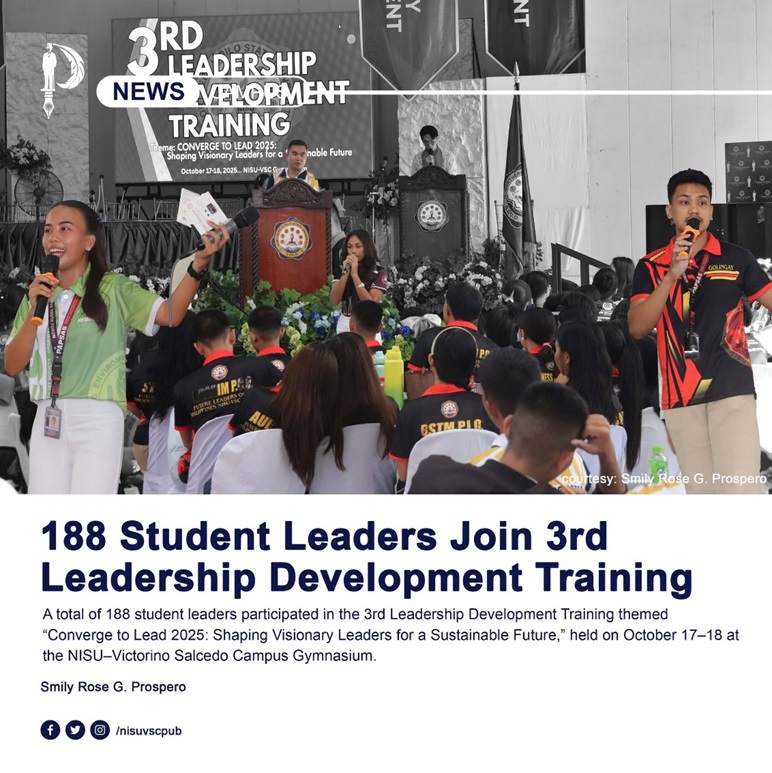
The College of Criminal Justice Education recognizes the importance of student participation in conferences, seminars, workshops, and other professional development activities as essential components of academic and career preparation. These activities provide students with opportunities to broaden their knowledge, gain insights into current trends and emerging issues in criminology, and learn from experts, practitioners, and professionals in the criminal justice and security sectors. Through participation in these academic and professional engagements, students enhance their critical thinking, communication, leadership, and practical skills while developing a deeper understanding of ethical standards, professional responsibilities, and contemporary challenges in their chosen fields. These initiatives also foster collaboration, knowledge sharing, and lifelong learning, helping prepare students to become competent, responsible, and service-oriented professionals.
4. Student Research and Innovation
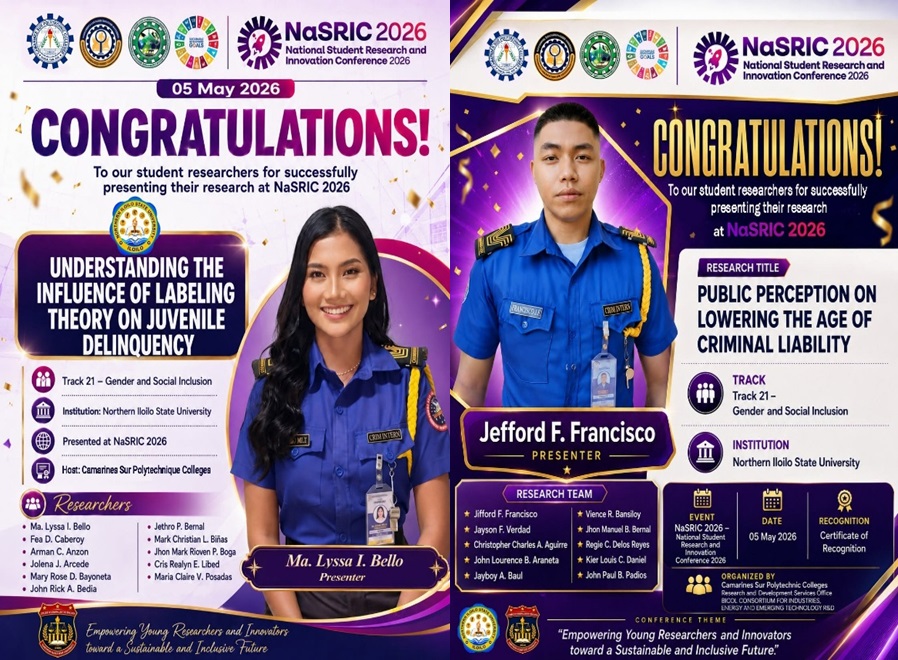
The College of Criminal Justice Education promotes student research and innovation as essential components of academic excellence, critical thinking, and evidence-based practice. Through research activities and innovation initiatives, students are encouraged to explore relevant issues and emerging challenges in criminology, criminal justice, public safety, and industrial security management. These initiatives provide opportunities for students to develop their research competencies, apply scientific methods, analyze real-world problems, and propose practical, ethical, and innovative solutions to contemporary concerns in their respective fields.
The College supports students in undertaking research projects, presenting research findings, participating in national and international research conferences and competitions, and developing technology-driven solutions that contribute to crime prevention, law enforcement, forensic investigation, and community safety. Through faculty mentorship and collaborative learning, students are guided in strengthening their analytical, investigative, and problem-solving skills while upholding research integrity and ethical standards. These efforts foster a culture of inquiry, creativity, and innovation, preparing future criminal justice and security professionals to contribute meaningfully to institutional development and community advancement.
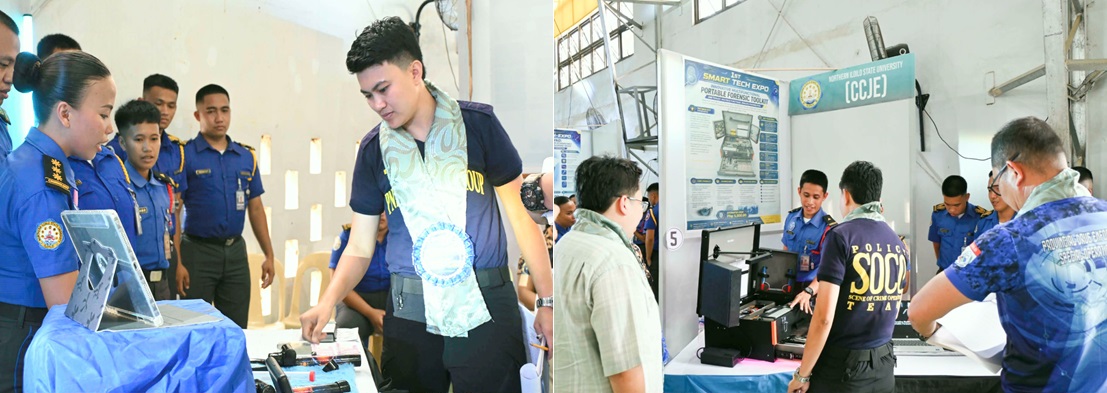
The photos below show student researchers engaging with industry experts during the presentation of their innovative research projects related to the field of criminology at the 1st Smart-Tech Expo for Criminology Innovators.
Awards and Achievements
| Design and Development of Spectra-Find: A Magnifying Glass with Built-in Rechargeable Dual-Light and a Detachable Fingerprint Brush (Venancio, J.V. et al) Competition Entry: 1st Smart-Tech Expo for Criminology Innovations
|  |
| Development of Ridge Counter From Recycled Push Pin and Marker Casing with a Rechargeable Light for Forensic Application (Baterbonia, I. B. et. al) Competition Entry: 1st Smart-Tech Expo for Criminology Innovations
|  |
| Innovative multifunctional portable forensic toolkit (Tiña, C.P.A. et.al ) Competition Entry: 1st Smart-Tech Expo for Criminology Innovations
|  |
| Development of Fingerprint Powder From Scratch Paper( Rosales, W. K. A. et.al) Competition Entry: 1st Smart-Tech Expo for Criminology Innovations | 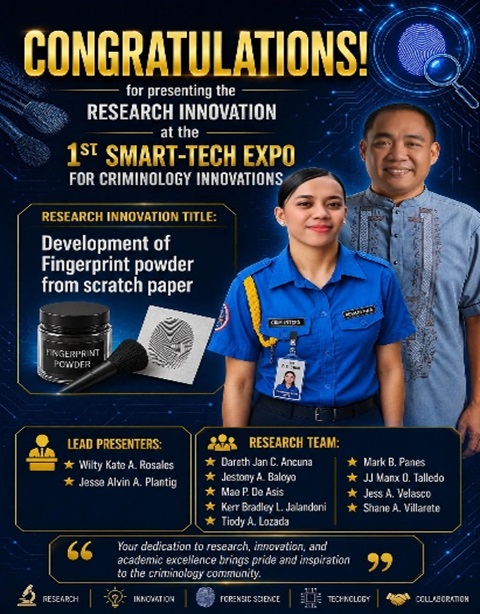 |
| Development of Fingerprint Powder from Red Mud Infused with Graphite Material (Laurencio, K.E.A et.al) Competition Entry: 1st Smart-Tech Expo for Criminology Innovations | 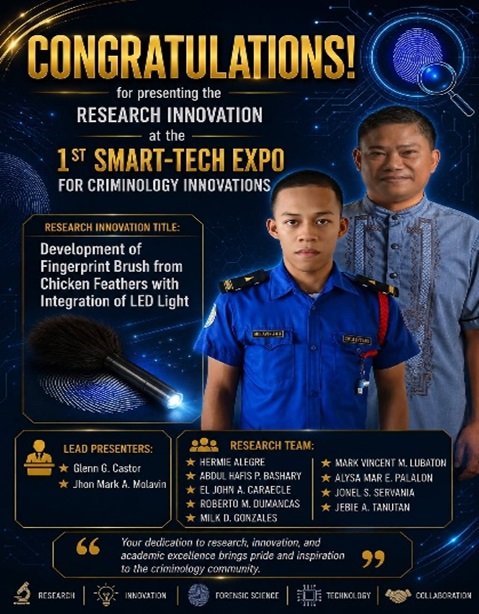 |
L. Accreditation, Recognition, and Professional Outcomes
1. Accreditation Status
The program is currently Level III, Phase 2 accredited and is preparing for the Level IV accreditation to improve its compliance with established standards for higher education.
Level III, Phase 2 Reaccredited

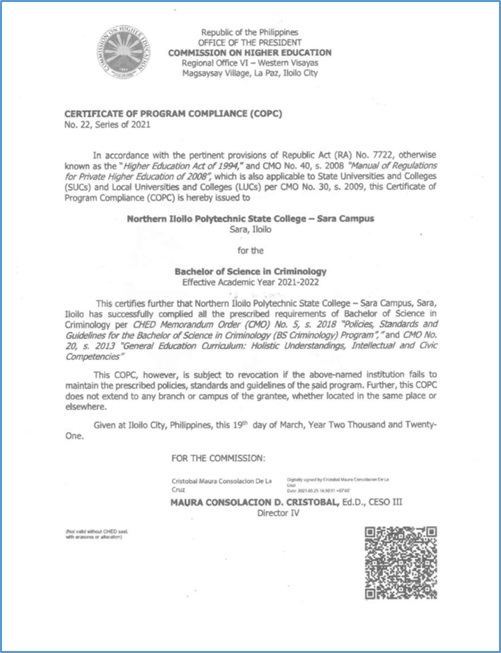
2. CHED Recognition/AuthorityThe program operates under a Certificate of Program Compliance (COPC) signifying its compliance with the applicable requirements and standards for program delivery.
3. Licensure Examination Information and Performance
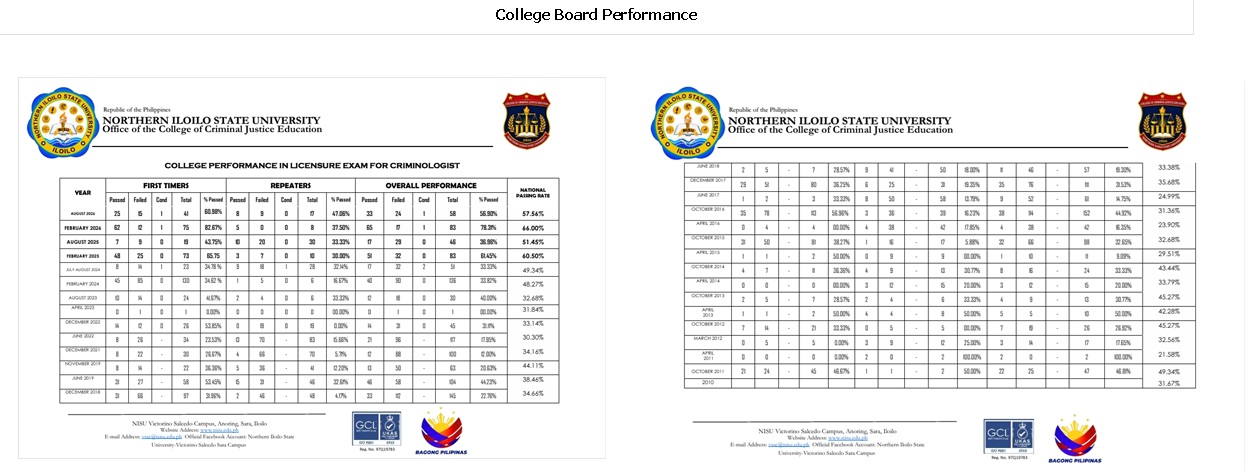
The program recognizes the importance of the Criminologists Licensure Examination (CLE) in assessing graduates' professional knowledge and competencies. It supports licensure examination preparation through academic instruction, review activities, assessment, and monitoring of graduates' examination performance.

4. Other Relevant Quality Assurance Information
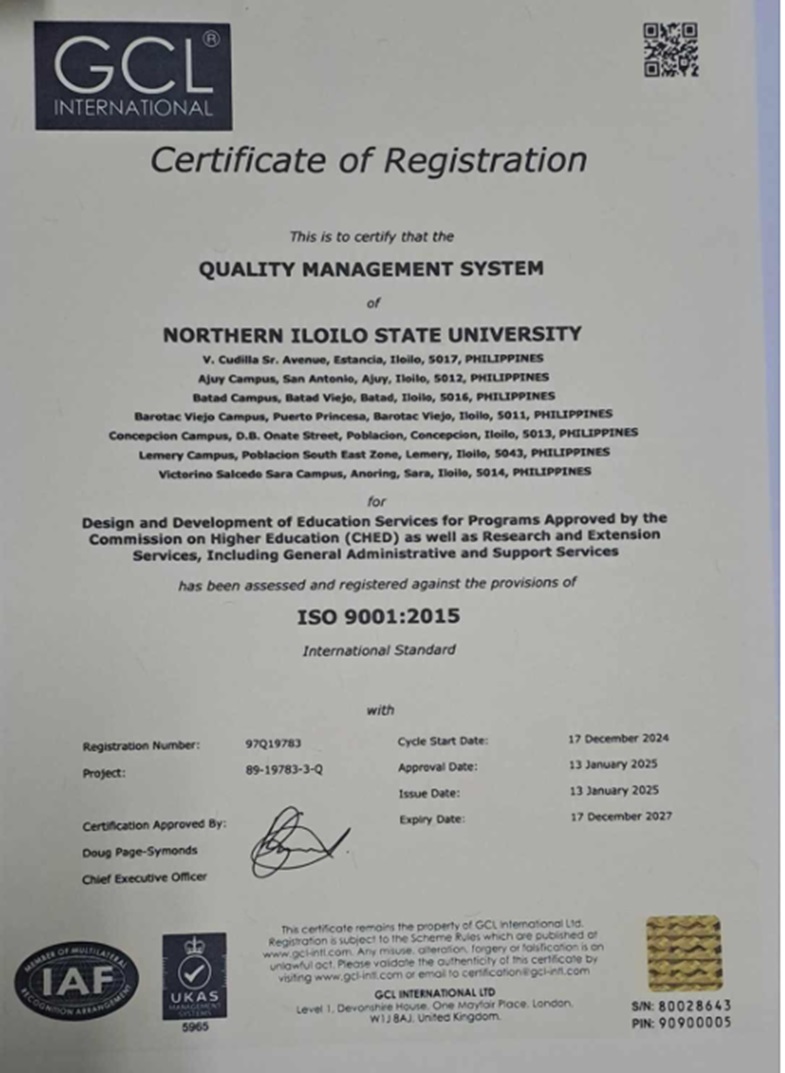
The university is an ISO certified institution and implements quality assurance measures to promote continuous improvement and compliance with institutional and external standards.
M. Career and Graduate opportunities
The Bachelor of Science in Criminology program prepares graduates for career opportunities in law enforcement, criminal investigation, corrections, forensic services, public safety, security management, and other fields related to criminology and criminal justice. Through academic instruction, practical training, research, and community engagement, the program aims to develop graduates who possess the knowledge, skills, ethical values, and professional competencies necessary for employment and continuing professional development.
1. Potential Career Opportunities
Graduates of the BS Criminology may pursue careers in government agencies, private organizations, and other institutions requiring competencies in crime prevention, investigation, security, and public safety. Depending on the position's qualifications and applicable eligibility or licensure requirements, potential career opportunities include:
- Police officer and law enforcement personnel
- Jail and corrections personnel
- Fire protection and emergency response personnel
- Criminal investigator
- Crime scene and forensic support personnel
- Security officer, security supervisor, or security consultant
- Intelligence and crime prevention personnel
- Fraud investigation and loss prevention personnel
- Research assistant or personnel in criminology-related research
- Community safety and crime prevention program personnel
2. Industries and Employment Sectors
BS Criminology graduates may seek employment in various public and private sectors, including:
- Government and law enforcement: Philippine National Police (PNP) and other law enforcement agencies, subject to their recruitment and qualification requirements.
- Corrections and rehabilitation: Bureau of Jail Management and Penology (BJMP), Bureau of Corrections (BuCor), and other correctional or rehabilitation institutions.
- Fire protection and emergency services: Bureau of Fire Protection (BFP) and related public safety organizations.
- Forensic and investigative services: Government forensic units, investigation offices, and private investigative organizations, subject to position-specific qualifications.
- Private security and risk management: Security agencies, corporate security departments, and risk management services.
- Business and corporate organizations: Fraud prevention, loss prevention, compliance support, and security operations.
- Education, research, and community development: Criminology-related research, crime prevention education, and community safety initiatives, subject to the qualifications required for each role.
3. Professional Opportunities
The program provides an academic foundation for graduates seeking professional advancement in criminology and related fields. Graduates may pursue the Criminologists Licensure Examination and, upon meeting the applicable requirements, obtain professional registration and licensure. They may also undertake specialized training and competency-based certifications relevant to criminal investigation, forensic science, public safety, security management, and other areas of professional practice.
4. Further Study Opportunities
Graduates may pursue further studies to broaden their expertise, improve career prospects, and prepare for leadership, research, or specialized professional roles. Possible areas of further study include:
- Master's degree programs in Criminology or Criminal Justice
- Graduate studies in public administration or public management
- Programs in forensic science and related investigative disciplines
- Graduate studies in criminal justice, security management, or public safety
- Doctoral studies in Criminology, Criminal Justice, or related disciplines
- Specialized professional development courses and continuing education Programs
5. Graduate Employment Outcomes
The College of Criminal Justice Education monitors the graduate and employment outcomes of its alumni to assess the effectiveness of its academic programs in preparing students for professional practice and employment. Official and verified data are gathered from available institutional records, graduate tracer studies, employment surveys, and other validated sources to determine graduates’ employment status, career progression, and alignment of their occupations with their respective fields of specialization. These data serve as important indicators of program effectiveness and graduate employability, providing a basis for curriculum enhancement, continuous quality improvement, and the strengthening of partnerships with government agencies, law enforcement institutions, and other industry stakeholders. Through systematic monitoring and evaluation, the College remains committed to producing competent, ethical, and employable graduates who can contribute meaningfully to the criminal justice system sector.
N. Program Highlight and Achievements
The College of Criminal Justice Education continuously endeavors to enhance academic quality, faculty competence, student development, research productivity, community engagement, and professional linkages. The program demonstrates its commitment to quality assurance through its Level III Reaccredited status under the Accrediting Agency of Chartered Colleges and Universities in the Philippines (AACCUP), reflecting its continuing pursuit of academic excellence, institutional development, and compliance with established accreditation standards. The College also monitors its Criminologist Licensure Examination results as an important indicator of program effectiveness and the quality of education provided to its graduates.
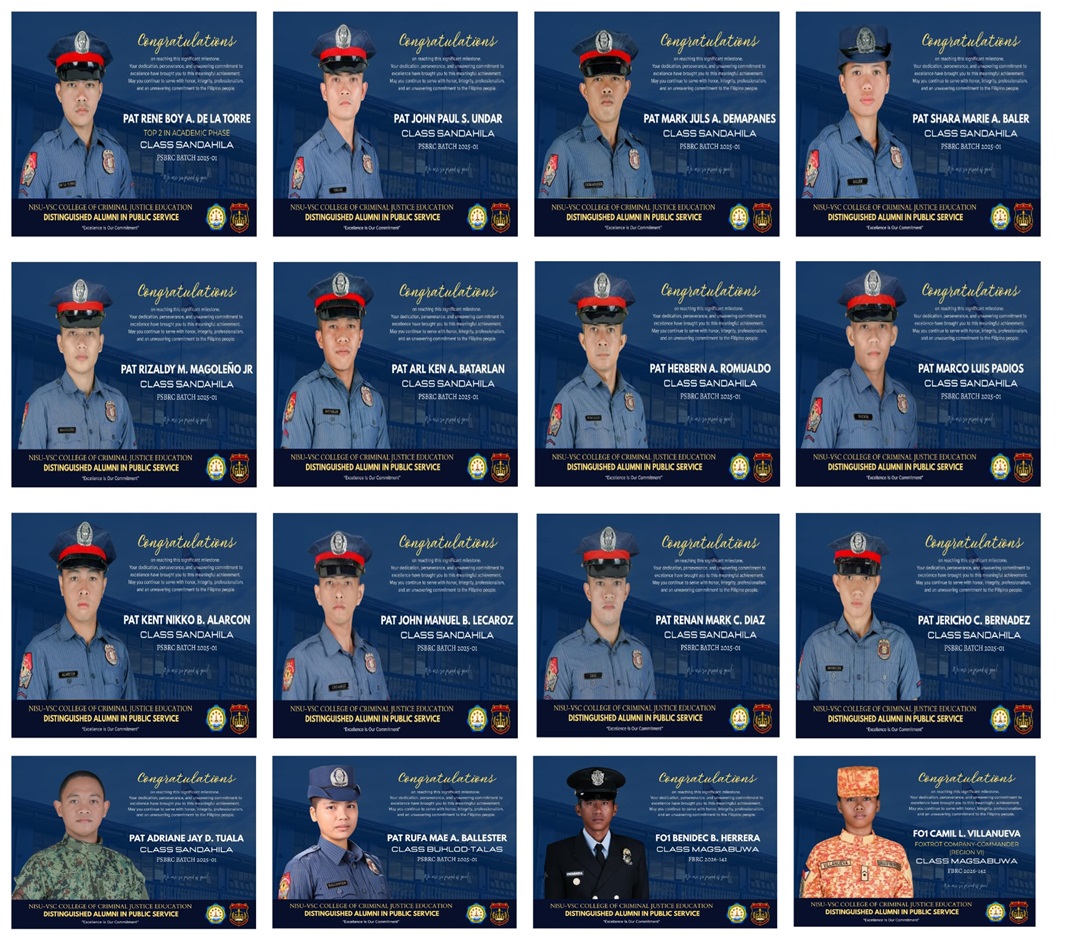
The program takes pride in the achievements of its alumni, who have demonstrated professional competence and excellence in various trainings, capacity-building activities, and professional development programs. Their accomplishments reflect the program's commitment to producing competent, ethical, disciplined, and service-oriented criminology graduates who can contribute meaningfully to public safety and the criminal justice system.
In research and innovation, faculty members have presented and published studies in multidisciplinary conferences and academic journals, while students have received awards for research presentations and innovative forensic technologies. These include the development of prototype devices recognized in innovation competitions and acknowledged by the Intellectual Property Office of the Philippines (IPOPHL). The 1st Smart-Tech Expo for Criminology Innovations serves as a significant milestone in the program's development, representing its initial endeavor toward internationalization by showcasing technological innovations, promoting research collaboration, and providing opportunities for academic exchange and professional engagement.
The College also strengthens its internationalization initiatives through academic engagements and institutional linkages with experts and institutions from Malaysia, India, and other Philippine universities. These partnerships provide opportunities for knowledge sharing, collaborative activities, professional development, and exposure to international practices in criminology and criminal justice education. Furthermore, the program's initiatives and accomplishments have attracted the attention of other Higher Education Institutions offering the same program, including Passi City College and Iloilo Merchant Marine School, which have benchmarked the program's practices and initiatives to support their own academic and institutional development.
Through its community extension initiatives, the program promotes crime prevention, peace and order, Indigenous Peoples' cultural preservation, and community empowerment. These activities strengthen the relationship between the institution and its partner communities while providing students and faculty members with opportunities to apply criminological knowledge and professional skills to real-world concerns.
Overall, these accomplishments demonstrate the College of Criminal Justice Education's continuing commitment to quality assurance, academic excellence, research and technological innovation, licensure examination performance, alumni development, internationalization, institutional benchmarking, and community service. Through sustained quality improvement and collaboration with local, national, and international partners, the program remains dedicated to advancing criminological education and producing competent, ethical, and socially responsible graduates who contribute to safer and more sustainable communities.
O. Program Statistics
1. Student Enrollment (Trend)
| Academic Year | First Year | Second Year | Third Year | Fourth Year | Total Enrollment | % Increase/Decrease |
| 2022–2023 | 288 | 182 | 130 | 176 | 716 | 3.8% Decrease |
| 2023–2024 | 216 | 200 | 161 | 120 | 697 | 2.55% Decrease |
| 2024–2025 | 208 | 198 | 197 | 157 | 760 | 9.1 % Increase |
| 2025–2026 | 121 | 172 | 188 | 192 | 673 | 8.8% Decrease |
| 2026–2027 | 121 | 100 | 162 | 201 | 627 | 9.3 % Decrease |
2. Number of Graduates and Graduation Rate
| Academic Year | Original Cohort | Number of Graduates | Graduation Rate (%) |
| 2024-2025 | 219 | 146 | 66.66% |
| 2025-2026 | 228 | 169 | 74.12% |
3. Licensure Examination Performance
| Indicators | 2022-2023 | 2023-2024 | 2024-2025 | 2025-2026 |
| First-Time Takers Passing Rate | 41.67% | 34.62 % | 65.75 % | 82.67% |
| Overall Passing Rate | 40.00% | 33.82% | 61.45% | 78.31% |
| National Passing Rate | 32.68% | 48.27% | 60.50% | 66 % |
4. Graduate Employment Outcomes
| Academic Year | Number of Graduates | Employed | Employability Rate (%) |
| 2023-2024 | 114 | 71 | 62.28% |
| 2022-2023 | 169 | 51 | 30.17% |
5. Faculty-Student Ratio
| Academic Year | Faculty-student Ratio |
| 2026-2027 | 1:40 |
6. Retention Rate
| Academic Year | Previous Enrollment | Continuing Students | Retention Rate (%) |
| 2026–2027 | 673 | 584 | 86.77% |
P. Contact Information
Program Chairperson/Coordinator: CHRISMEL JOY S. AGOLITO, MS Crim
College/Academic Unit: College of Criminal Justice Education
Campus: Northern Iloilo State University – Victorino Salcedo Campus
Official NISU Email Address:
Official Contact Number:
Office Location: Brgy. Anoring, Sara, Iloilo
Official Application/Admission Link: